

The Moment Every New EV Owner Faces
You have just driven your new electric car into your villa garage in Qatar. The battery is at 80%, the car looks perfect, but one question suddenly appears: “How am I going to charge this every day?”
Do you use a normal socket? Do you need a wallbox EV charger? Will your villa need electrical upgrades? Who installs it safely?
This is the exact moment many EV owners in Qatar are facing right now. Electric vehicles are already on the roads, from Tesla, BMW, BYD, Kia, Hyundai, Audi, Porsche, Volvo, MG and more. The cars are here. Now the charging infrastructure needs to match.
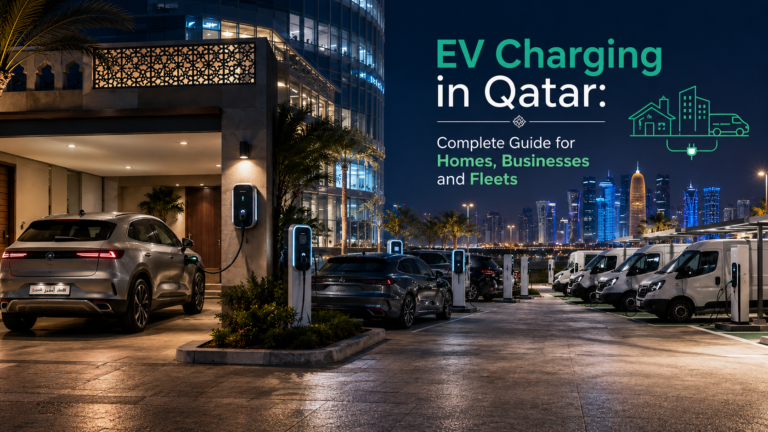
Whether you own a villa, manage a business, operate a fleet, or develop residential properties, EV charging is no longer a future idea. It is practical infrastructure you can install today.
Why EV Charging Matters in Qatar Now
Qatar is moving toward cleaner, smarter and more sustainable transport. As electric vehicle adoption grows, private and commercial charging solutions are becoming more important for daily convenience, energy planning and long-term property value.
Public charging will continue to expand, but most EV owners do not want to depend on public stations every day. Home charging, workplace charging, and fleet charging give users more control.
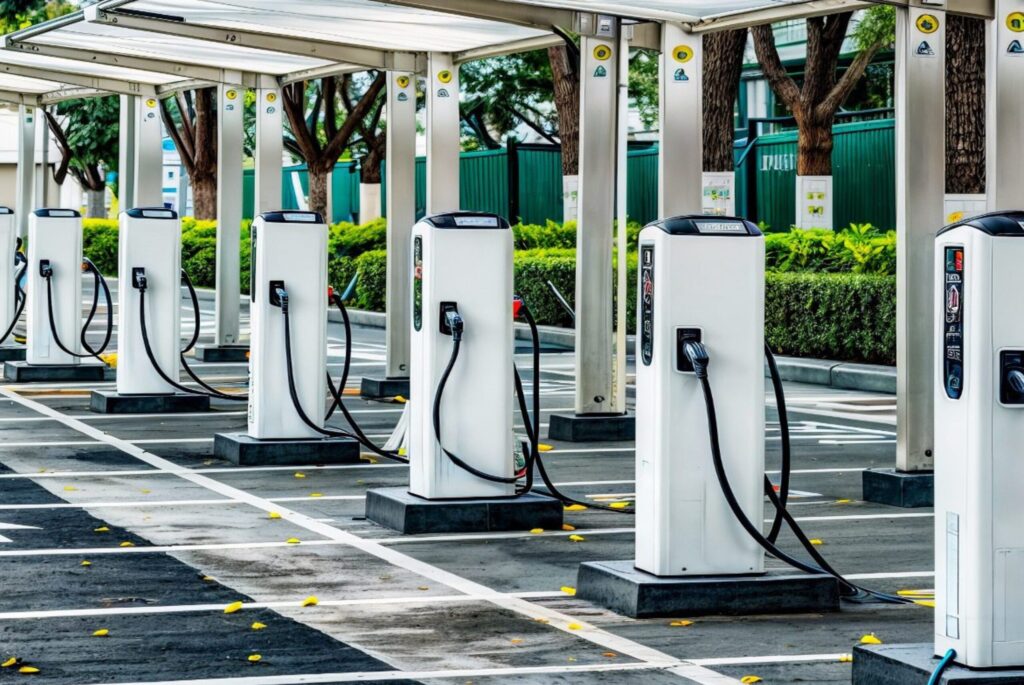
For homeowners, it means waking up to a charged car every morning.
For businesses, it creates a useful facility for staff, customers and visitors.
For fleet operators, it supports smoother operations and lower long- term fuel dependency.
The companies and property owners who install EV charging early will be better prepared as demand increases.
How EV Charging Actually Works
EV charging is simple when explained clearly. Electricity flows from the power supply through a charging station and into your vehicle’s battery. The charging speed depends mainly on two things:
- The charger’s power output, measured in kilowatts
- The vehicle’s onboard charging capacity
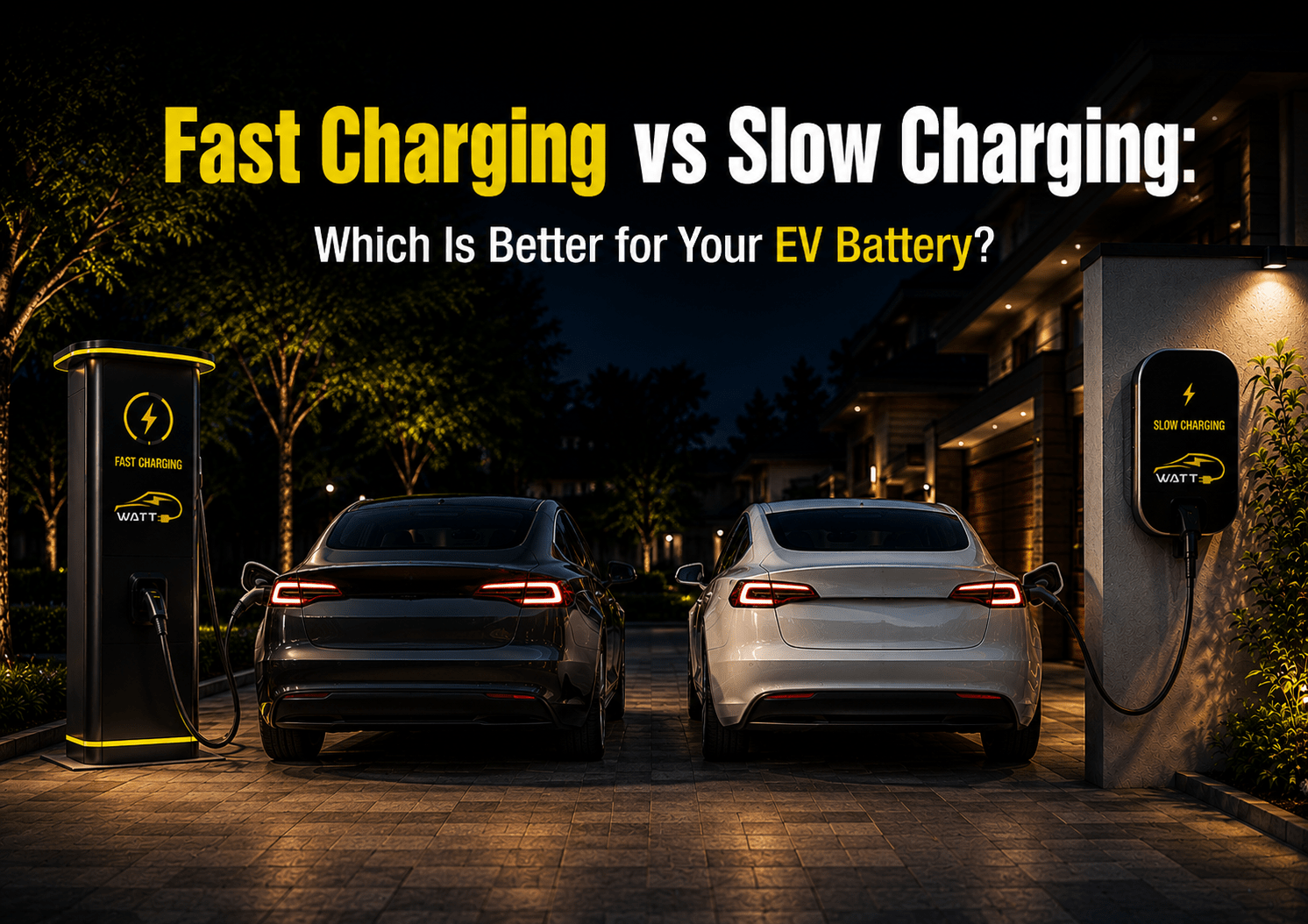
A normal 3-pin socket can charge an EV, but it is slow and not designed for regular high-demand vehicle charging. A dedicated home EV charger is faster, safer and more reliable for everyday use.
Common EV Charging Levels
Level 1 charging:
Uses a standard socket. It is slow and suitable only for occasional or emergency charging.
Level 2 AC charging:
Usually ranges from 7kW to 22kW. This is the most common choice for homes, offices, villas, apartment buildings and hotels.
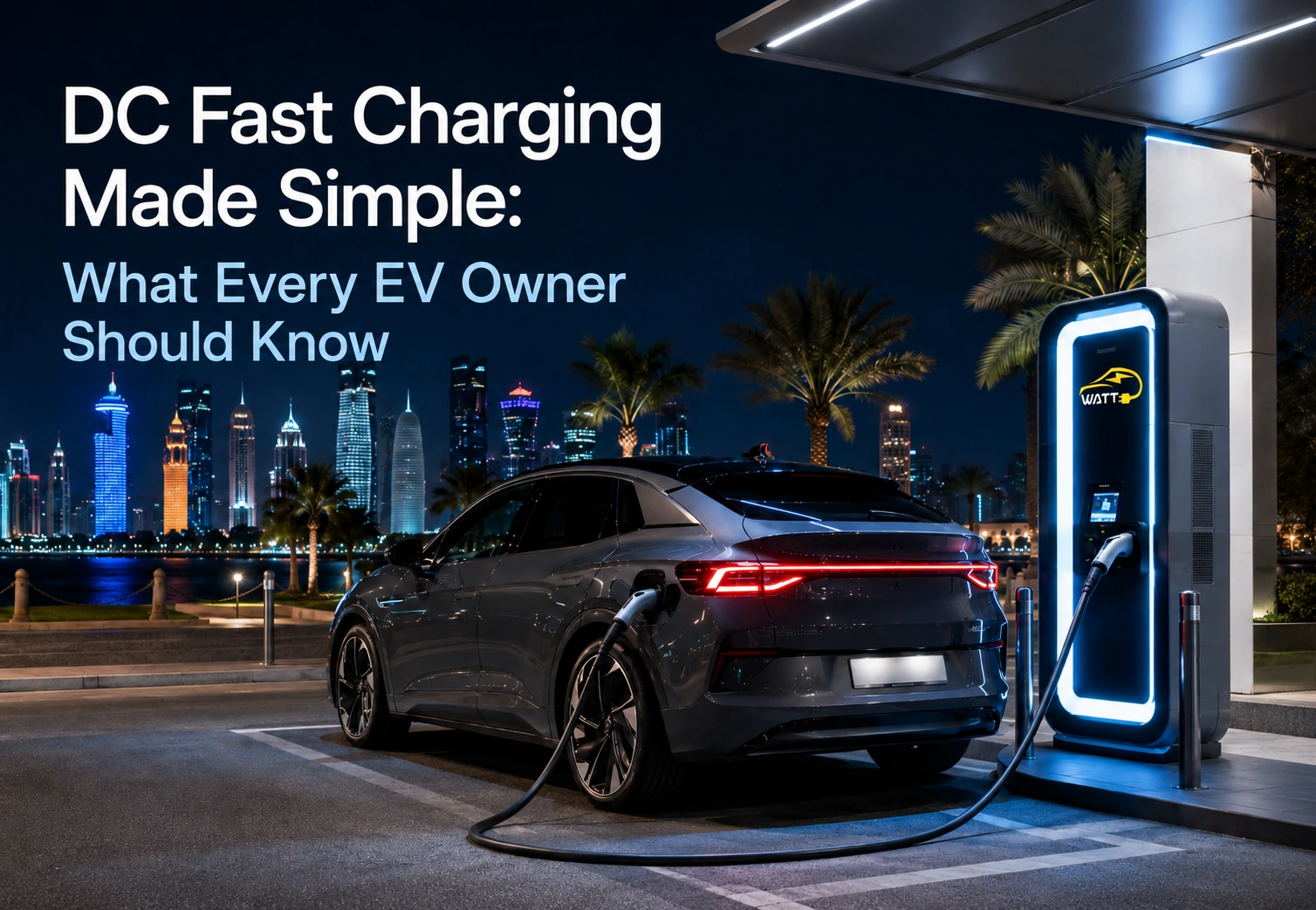
DC fast charging:
Designed for commercial sites, fleets and high-traffic locations where vehicles need faster turnaround times.
Connector types also matter. EVs in Qatar may use Type 2, CCS, CHAdeMO, GB/T or other connector standards. A professional EV charger installation helps ensure your charger matches your current vehicle and future EV needs.
EV Charging for Homes in Qatar
For most villa owners, a dedicated wallbox charger is the best daily charging solution. It gives you better speed, improved safety and more convenience than using a standard electrical outlet.
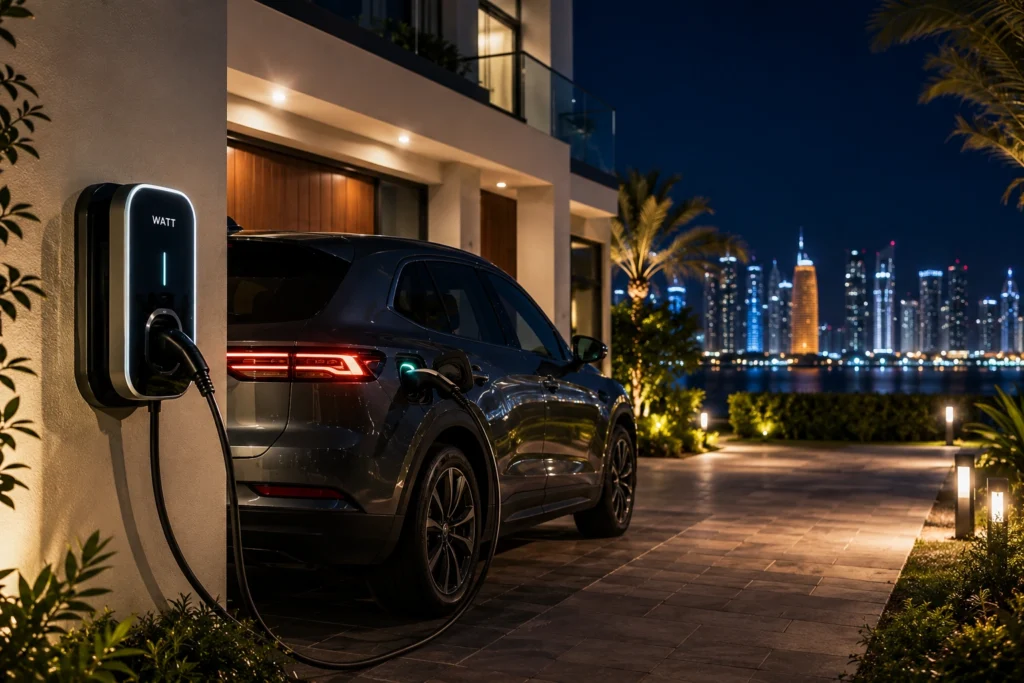
A 7kW charger may suit many daily drivers, while a 22kW charger may be suitable if your electrical supply and vehicle support it. The right option depends on your car, driving routine and home electrical capacity.
Home EV Charger Checklist
Before installing a private charger, check the following:
- Does your villa have enough electrical capacity?
- Do you need a 7kW or 22kW charger?
- Is the charger compatible with your EV connector?
- Is the installation team experienced and certified?
- Can the charger support smart scheduling?
- Is the charger placed in a safe and convenient location?
- Will the system allow future upgrades?
A proper home charger gives you freedom. You can plug in at night and start each day ready to drive without waiting at public charging points.
EV Charging for Businesses
Businesses in Qatar can benefit strongly from workplace and commercial EV charging. Offices, malls, hotels, showrooms, residential towers and mixed-use developments can all use charging stations as a valuable facility.
EV charging can support:
- Employee convenience
- Customer experience
- ESG and sustainability goals
- Property value
- Brand reputation
- Future-ready infrastructure
For commercial sites, planning matters. A business may start with two or four charging points, but demand could increase quickly. That is why scalable design is important from day one.
Commercial Charging Checklist
Before installing chargers at a business location, review:
- Parking layout and traffic flow
- Available electrical capacity
- Number of chargers required now
- Future expansion needs
- AC versus DC charger requirement
- Load balancing for multiple chargers
- Monitoring and reporting needs
- Maintenance and technical support
Load balancing is especially important for commercial EV charging. It helps control power distribution when several vehicles charge at the same time, reducing stress on the building’s electrical system.
EV Charging for Fleets
Fleet operators need a different charging strategy. Delivery vehicles, service vans, hospitality vehicles, government fleets and logistics teams cannot afford unnecessary downtime.
For fleets, charging infrastructure must support daily operations. That may include DC fast charging, charging schedules, driver access control, energy monitoring and usage reports.
A good fleet charging system should help answer practical questions such as:
- Which vehicles need charging first?
- How much energy does each vehicle use?
- Can charging happen during off-peak hours?
- How many chargers will be needed as the fleet grows?
- Can managers track charging activity in real time?
For fleet operators in Qatar, EV charging is not only about sustainability. It is about operational planning.
Why Choose WATT for EV Charging in Qatar
WATT provides complete EV charging solutions for homes, businesses, fleets and property developments across Qatar. Instead of only supplying hardware, WATT supports the full process from planning to installation and maintenance.
WATT can help with:
- Site survey and electrical capacity assessment
- Charger selection based on vehicle and usage
- Professional EV charger installation
- Home, commercial and fleet charging solutions
- Smart charging and monitoring setup
- Ongoing support and maintenance
- EV charging solutions for villas, apartments, offices, hotels and fleets
This makes the process easier for customers who are unsure where to start. You do not need to guess which charger fits your car or property. A proper assessment gives you a clear, safe and practical solution.
Final Thoughts
EV charging in Qatar is moving from an optional upgrade to essential infrastructure. Homeowners want daily convenience. Businesses want future-ready properties. Fleet operators need reliable charging systems that support their operations.
The best time to plan your charging setup is before demand becomes urgent. With the right charger, professional installation and long-term support, EV ownership becomes easier, cleaner and more convenient.
If you are ready to install EV charging at your villa, business, apartment building or fleet facility, WATT can help you choose the right solution with confidence.
Visit WATT today — Qatar’s trusted EV charging partner for homes, businesses and fleets.
Frequency Answer Question
1. What is the best EV charger for home use in Qatar?
A dedicated wallbox EV charger is usually the best choice for home use. It charges faster and more safely than a standard socket.
2. Can I install an EV charger in my villa?
Yes. Most villas can install a private charger after checking electrical capacity, charger location and installation requirements.
3. How long does EV charger installation take?
A standard home installation can often be completed quickly, but timing depends on site conditions, wiring needs and charger type.
4. Do businesses need AC or DC chargers?
AC chargers work well for offices, hotels and long-stay parking. DC chargers suit fleets and high-turnover commercial locations.
5. Why should I choose professional EV charger installation?
Professional installation improves safety, charger performance, compliance and long-term reliability.