

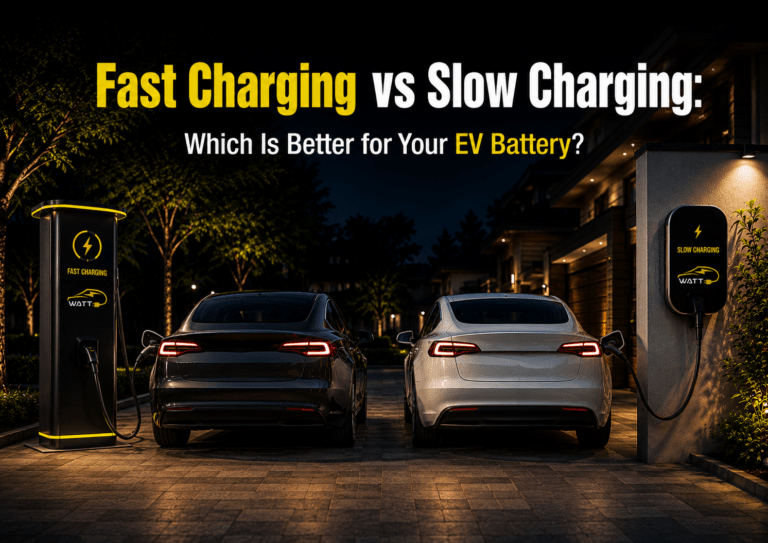
You plug your new electric car into a home EV charger before bed. The battery rises slowly, but by morning, the car is ready. Across Doha, another driver stops at a fast charger, grabs a coffee, and gets a major top-up in less than an hour.
Both drivers ask the same question: which method is better for battery health?
For many EV Qatar drivers, this topic creates confusion. Some people say slow charging is always safer. Others believe fast charging is completely harmless. The honest answer sits in the middle: both methods are useful, but they serve different situations.
Fast Charging and Slow Charging Explained
Your EV battery stores energy as DC power, while most homes and buildings receive AC power from the grid. This is where the AC vs DC charging difference matters.
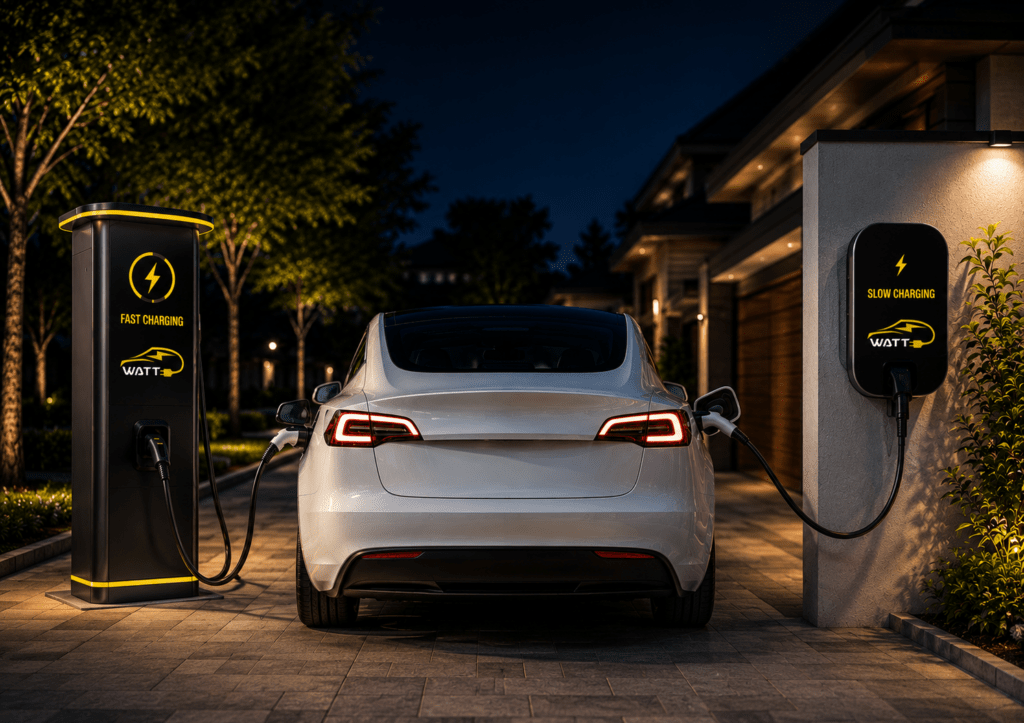
With slow AC charging, power enters the car first. The vehicle’s onboard charging system converts AC into DC before storing it in the battery. This process is steady, controlled, and ideal for overnight charging.
With DC fast charging, the conversion happens inside the charging station. The charger sends DC power directly to the battery, which allows faster energy delivery. That is why a public electric vehicle charging station can charge much faster than a standard home setup.
Does Fast Charging Damage the Battery?
A fast charging car charger will not instantly damage your EV. Modern electric cars include battery management systems that control temperature, power flow, and charging speed.
However, fast charging creates more heat than slow charging. Over many years, using high-power charging every day may cause slightly faster battery wear compared with regular slow charging.
Think of it like exercise. Sprinting is useful when you need speed, but walking is easier on the body for daily movement. Fast charging is not bad. It simply works best when you need quick range.
When Slow Charging Is Better
For daily driving, slow charging usually wins. A home electric car charger gives you convenience, control, and better long-term battery care. You plug in at night and start the next morning with enough range.
Slow charging is best when:
- You charge overnight at home
- Your car stays parked for several hours
- You drive normal daily routes
- You want lower battery heat stress
- You prefer a private charging routine
A professional EV charger installation also makes home charging safer and more reliable than using a basic socket.
When Fast Charging Makes Sense
Fast charging is the right choice when time matters. If you are travelling across Qatar, managing a fleet, or using public electric car charging stations, waiting many hours is not realistic.
A reliable electric car charging station Qatar drivers can access helps reduce range anxiety and supports longer trips. Fast charging also matters for businesses, hotels, malls, logistics fleets, and public locations where vehicles need quick turnaround.
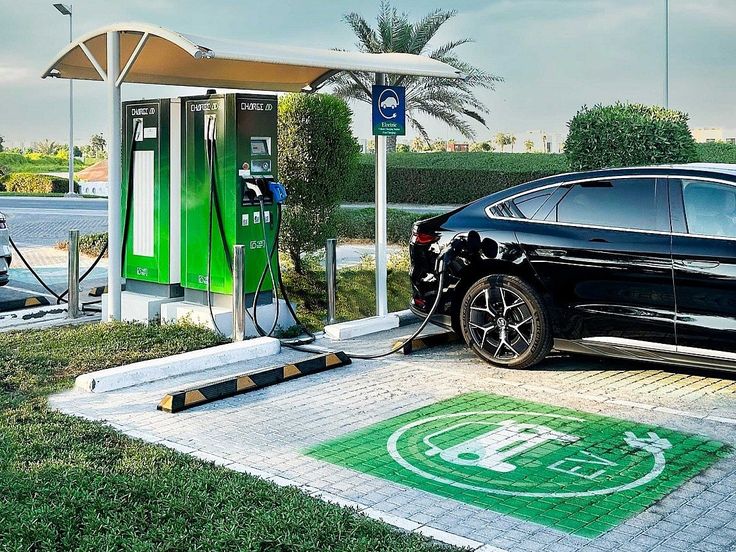
Some sites may use a 150 kW charger, while larger commercial locations may install a 180 kW EV charger, depending on electrical capacity, vehicle compatibility, and charging demand. Still, your EV controls the final speed, so a higher charger rating does not mean every car charges at the maximum rate.
Qatar’s EV Charging Landscape
Electric vehicle adoption is growing across Qatar, and charging infrastructure is becoming part of daily mobility. EV charging companies and each charge point operator play an important role in building a reliable network for homes, businesses, fleets, and public spaces.
As more EV charging points appear across residential areas, offices, hotels, malls, and highways, drivers will have more flexibility. A strong charging network also supports Qatar’s move toward cleaner transport.
Maintenance Matters
Whether you use slow or fast charging, charger quality and maintenance matter. Poor installation, damaged cables, loose connections, or weak servicing can reduce performance and create safety risks.
Regular EV charger maintenance helps keep charging safe, efficient, and reliable. For commercial sites, EV charging station maintenance is even more important because multiple users depend on the system every day.
Best Practice Checklist for EV Owners
- Use slow charging for daily home use
- Use fast charging when you need speed
- Avoid leaving the battery extremely low for long periods
- Avoid keeping the battery at 100% longer than necessary
- Choose professional electric car charger installation
- Use trusted electric car charging stations
- Schedule charger maintenance when needed
The Simple Takeaway
Slow charging is usually better for everyday battery health because it creates less heat and fits naturally into your daily routine. Fast charging is better when you need quick range, public access, or commercial charging speed.
The best approach is not choosing one forever. Use slow charging at home most of the time, and use fast charging when your schedule demands it.
For the right EV charging setup in Qatar, contact WATT for home chargers, commercial charging stations, fleet solutions, and professional support.
Visit WATT today — Qatar’s trusted EV charging partner for homes, businesses and fleets.
Frequently Asked Questions
1. Is fast charging bad for my EV battery?
Fast charging is safe when used properly, but daily use may create more heat and slightly increase long-term battery wear.
2. Is slow charging better for everyday use?
Yes, slow charging is usually better for daily charging because it is gentler, steady, and ideal for overnight home use.
3. When should I use a fast charger?
Use a fast charger during long trips, busy days, emergencies, fleet use, or when you need quick range in less time.
4. Do I need a home EV charger in Qatar?
Yes, a home EV charger gives better convenience, safety, and control compared to using public chargers every day.
5. How often should EV chargers be maintained?
Home and commercial chargers should be checked regularly to keep cables, connectors, power flow, and safety systems working properly.