That Moment When Charging Speed Suddenly Matters
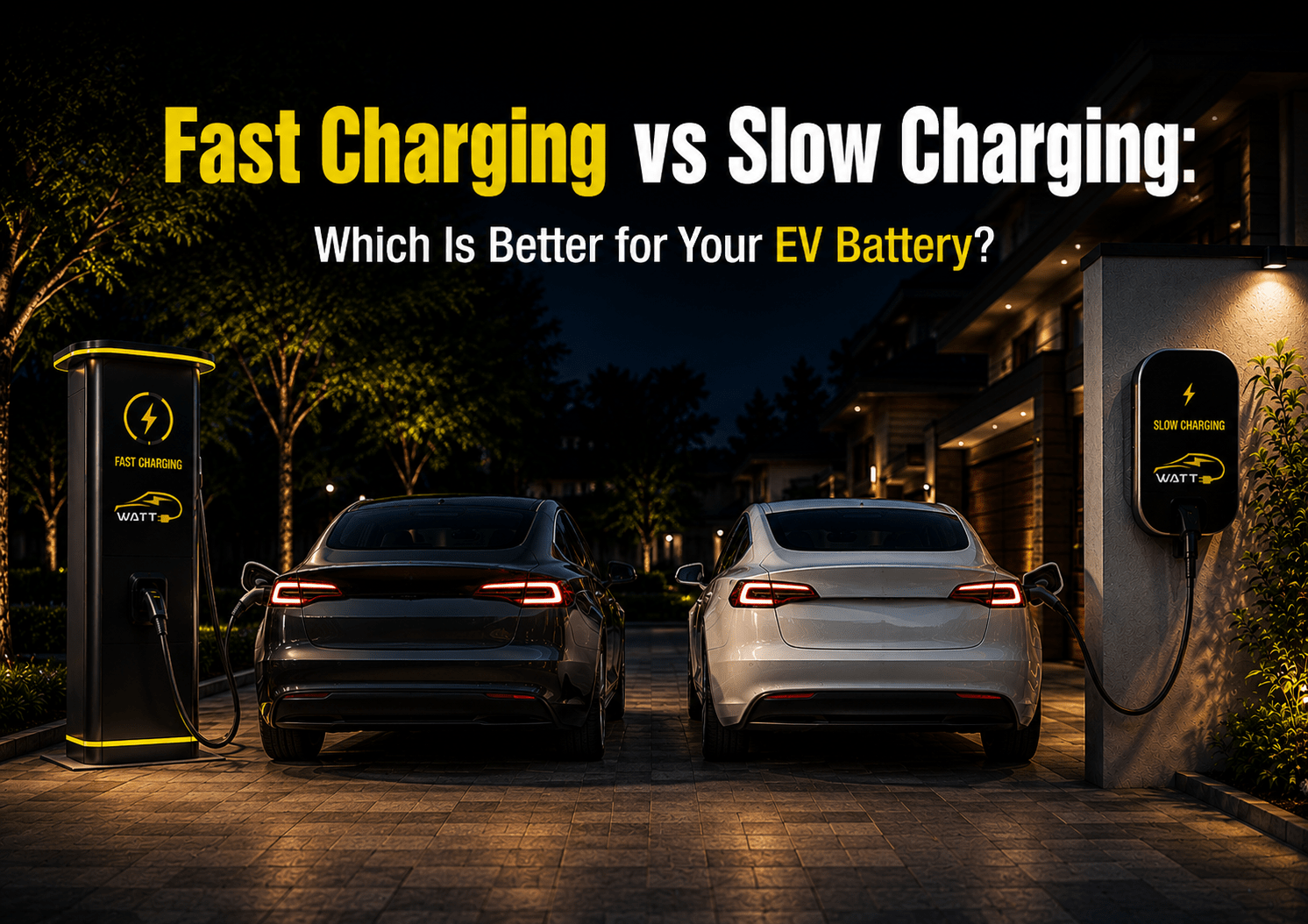
You plug your EV into a home charger overnight, and by morning, the battery is full. Then one day, you stop at a public charging station in Doha, connect to a DC fast charger, and the battery rises much faster.
Same car. Same battery. Very different charging speed.
That is when many EV owners start asking the real question: why is DC fast charging so much faster than normal AC charging?
The answer is simple once you understand how electric vehicle charging works. It is not only about charger size or cable thickness. It is about how electricity reaches your EV battery and how quickly the system can deliver usable power.
For EV owners in Qatar, this matters because the right charger can save time, improve daily convenience, and make EV ownership feel much easier.
AC vs DC Charging: The Simple Difference
Every EV battery stores power as DC electricity, which means direct current. However, the electricity supplied to homes, villas, offices, and most buildings is AC electricity, which means alternating current.
When you use a home wallbox EV charger, AC power flows from your property into the car. Then the vehicle’s onboard charger converts that AC power into DC power before it reaches the battery.
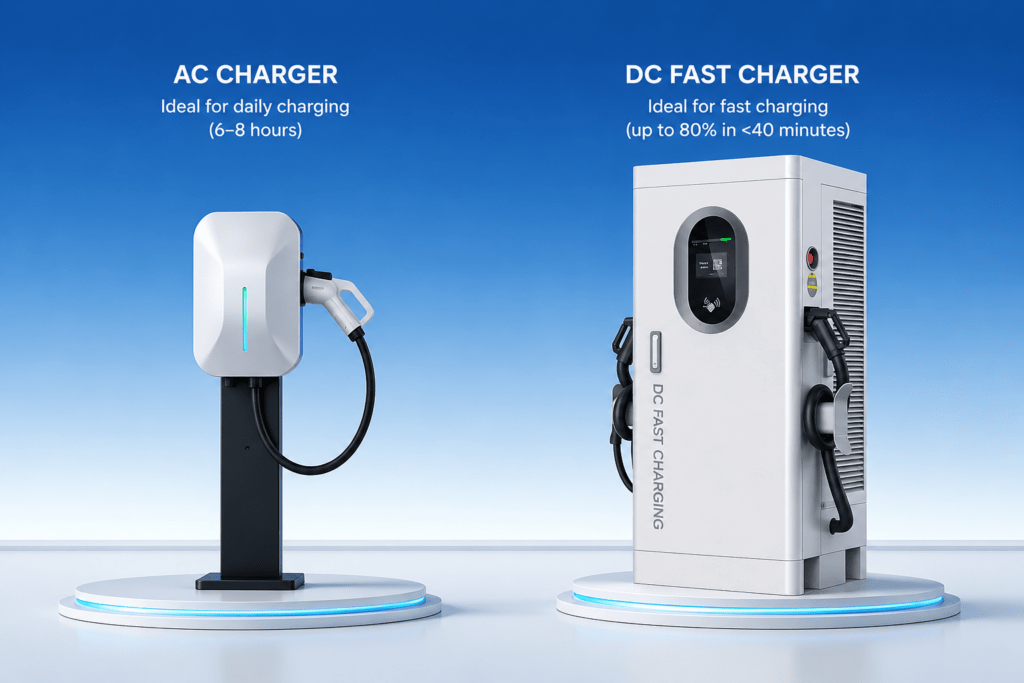
You can think of the onboard charger as an internal ac dc battery charger. It does the conversion job safely, but it has a limit. It can only convert electricity at a certain speed. That is why AC charging works well for daily use but does not charge as quickly as DC fast charging.
A DC fast charger works differently. It converts AC power into DC power inside the charging station itself. Because the charger has larger and more powerful components than the converter inside your car, it can send DC electricity directly to the battery at a much higher rate.
That is the main reason DC charging is faster.
Why DC Fast Charging Is Faster
DC fast charging removes the biggest speed limit in normal AC charging: the vehicle’s onboard charger.
In simple terms:
- AC charging sends power to the car first, then the car converts it.
- DC fast charging converts the power before it reaches the car.
- The battery receives DC power directly.
- More power can move into the battery in less time.
This does not mean DC charging is always the best choice. It means DC charging is the right choice when speed matters.
For example, a home charger is perfect when your car stays parked for several hours. However, if you manage a fleet, operate a commercial site, or serve drivers who need quick top-ups, DC charging becomes far more practical.
Understanding Kilowatts Without Confusion
Charging speed is usually measured in kilowatts, written as kW. A 1-kilowatt rating simply describes how much power can flow at a given time. In general, the higher the kilowatt rating, the faster a charger may be able to move energy into the battery.
A home EV charger may commonly operate in the 7kW to 22kW range, depending on the property, charger type, and vehicle capability. A commercial DC fast charger can deliver much higher power, which helps reduce charging time.
However, the charger rating is not the only factor. Your actual charging speed also depends on:
- Your EV’s battery capacity
- Your vehicle’s maximum charging limit
- Battery temperature
- Current battery percentage
- Charger condition
- Site electrical capacity
This is why one car may charge faster than another on the same charger. The charging station may be powerful, but the vehicle controls how much power it can safely accept.
Common Charging Terms EV Owners May See
When researching chargers online, you may come across technical terms that sound similar but mean different things.
A 110V DC battery charger usually refers to smaller battery charging equipment, not a proper EV charging station for daily vehicle use. EVs need chargers designed for vehicle battery management, electrical safety, and long-term use.
A DC-to-DC charger is another related term. This technology is often used in battery storage, solar systems, and auxiliary power setups where power needs to move between two DC sources. It is useful in the wider clean-energy world, but it is not the same as a public DC fast charger for EVs.
You may also see searches for lifepo4 battery qatar when people explore solar storage, backup power, or off-grid systems. LiFePO4 batteries can support solar and energy storage projects, and in some cases they may work alongside EV charging infrastructure as part of a smarter energy system.
Where DC Fast Charging Makes the Most Sense
DC fast charging is not necessary for every EV owner. It works best in places where vehicles cannot stay parked for long periods.
Home Charging
For most villa owners and daily drivers in Qatar, a private wallbox charger is usually enough. You park the car at night, plug it in, and start the next day with enough charge.
Home charging is practical because you do not need speed while you sleep. You need safety, reliability, and convenience.
Business and Commercial Locations
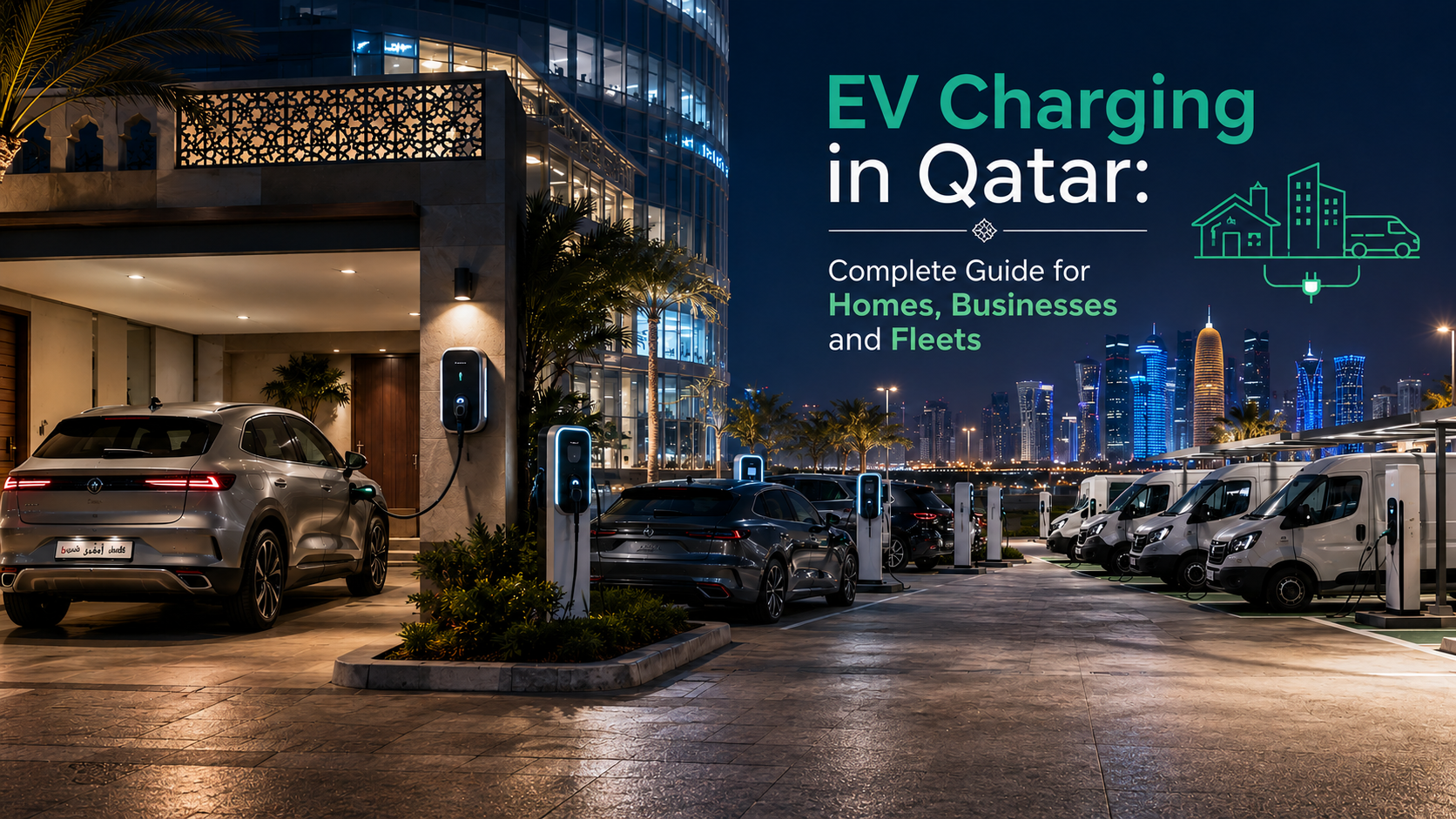
Commercial properties can use both AC and DC chargers. AC chargers work well for staff parking, hotels, offices, and long-stay locations. DC fast chargers suit places where drivers need faster turnaround, such as malls, service stations, public parking, and high-traffic sites.
Fleet Operations
Fleets often benefit the most from DC fast charging. Delivery vehicles, service vehicles, hotel transport, and logistics fleets need to stay on the road. Faster charging helps reduce downtime and keeps operations moving.
Public Charging Stations
At public EV charging stations, speed matters. Drivers usually do not want to wait for several hours. A DC fast charger gives them a faster and more convenient charging experience.
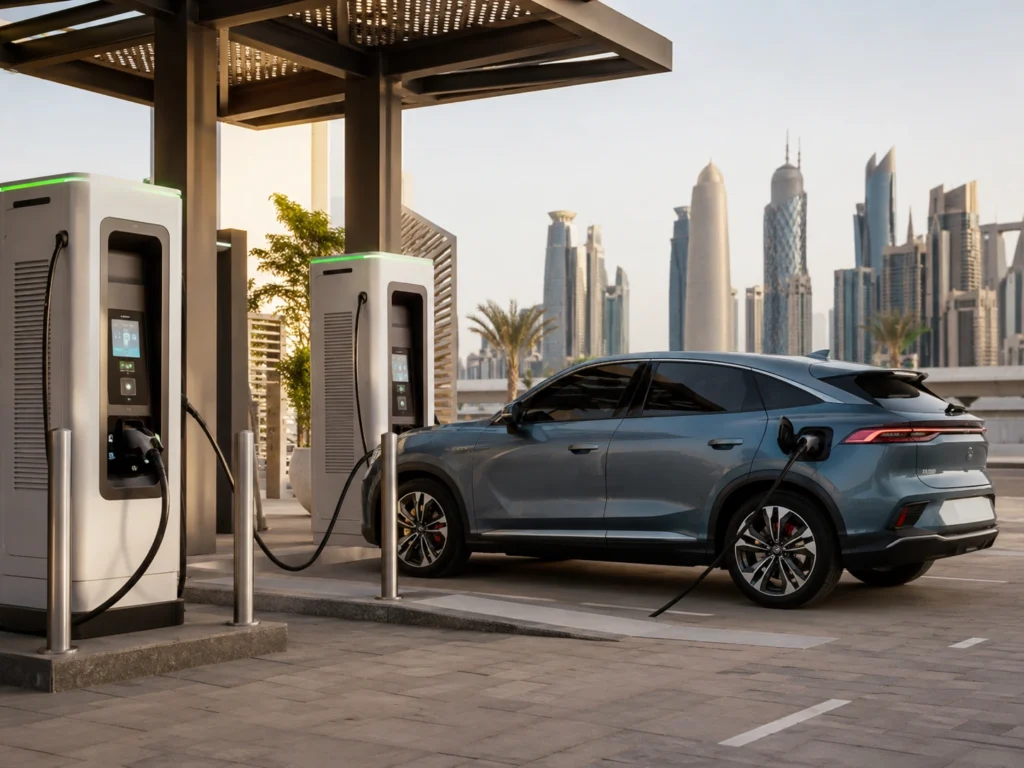
For example, an electric car charging station Qatar drivers use in a busy public area must be planned around speed, safety, access, and reliability.
AC or DC: Which Charger Should You Choose?
The right choice depends on how you use your EV or property. A bigger charger is not always better. The best charger is the one that matches your real need.
Quick Checklist for EV Owners
Choose AC charging if:
- You mainly charge at home overnight
- Your car stays parked for long hours
- You want a cost-effective private charger
- You need daily convenience, not rapid charging
- You own a villa or apartment parking space
Choose DC fast charging if:
- You need quick charging during the day
- You run a commercial location
- You manage multiple EVs
- You operate taxis, delivery vehicles, or fleets
- You want to serve public EV drivers
- Vehicle downtime affects your business
EV Charger Installation: What to Check First
Before installing any EV charger in Qatar, the site needs a proper assessment. This is especially important for DC fast charging because it requires stronger electrical planning than a basic home charger.
Installation Checklist
Before choosing a charger, check:
- Available electrical capacity
- Parking layout and cable reach
- Charger type required: AC or DC
- Number of vehicles using the charger
- Current and future charging demand
- Load balancing requirements
- Safety protection and certified installation
- Monitoring and maintenance support
- Local approval and compliance requirements
A professional site survey helps avoid overspending. It also prevents common problems such as weak power supply, poor charger placement, overloaded circuits, or limited future expansion.
For safety and performance, always choose proper electric car charger installation instead of using temporary wiring or unsuitable charging equipment.
What About EV Charging Cost?
EV charging cost depends on the charger type, installation location, power requirement, cable distance, electrical upgrades, and whether the system is for home, business, fleet, or public use.
A home wallbox EV charger is usually the more affordable option because the system is smaller and simpler.
A DC fast charger costs more because it uses high-power equipment and may require stronger electrical infrastructure. For commercial sites and fleets, that higher investment can make sense because faster charging can support more vehicles and reduce waiting time.
The EV charging stations’ cost also depends on whether the project needs load balancing, network monitoring, payment features, weather protection, cable management, or future expansion capacity.
The important point is this: do not choose a charger only by price. Choose it based on usage, safety, long-term reliability, and upgrade potential.
DC Fast Charging and Qatar’s Clean Energy Future
EV charging is part of Qatar’s wider move toward smarter and cleaner energy use. As more drivers shift to electric vehicles, charging infrastructure will become a normal part of villas, offices, public spaces, hospitality locations, and fleet depots.
This shift also supports long-term movement away from conventional sources of energy and toward cleaner transport infrastructure. Unlike countries that rely heavily on hydro energy, Qatar’s renewable direction is strongly connected to solar power, smart energy management, and future-ready electricity systems.
In the future, EV charging can connect with solar energy, battery storage, and intelligent monitoring. This makes charging more efficient and supports better long-term energy planning.
For Qatar, this is especially important because the country has strong sunlight and a growing interest in renewable and sustainable energy.
Why Choose WATT for EV Charging in Qatar
WATT provides EV charging solutions for homes, businesses, commercial properties, fleets, developers, and public charging locations across Qatar.
The WATT approach focuses on giving customers the right charger for the right use case. That means a villa owner does not get pushed into an unnecessary commercial charger, and a business does not end up with a system that cannot grow.
WATT can support:
- Home wallbox EV charger installation
- Private charger solutions for villas and residences
- Commercial EV charging stations
- DC fast charger solutions
- Fleet charging infrastructure
- Site surveys and electrical assessment
- Smart charging and monitoring setup
- Ongoing maintenance and support
Whether you need a simple home charger or a larger commercial EV charging setup, WATT helps you plan, install, and manage the system properly. This makes WATT one of the trusted EV charging suppliers in Qatar 1for both AC and DC charging solutions.
Final Thoughts
DC fast charging is faster because it sends DC power directly to the EV battery and avoids the speed limit of the car’s onboard AC converter. That makes it ideal for commercial locations, fleet operators, and public charging stations.
However, not every EV owner needs DC charging. For most homes, a well-installed AC wallbox charger gives the best balance of convenience, safety, and value.
The smartest decision is not choosing the fastest charger. It is choosing the charger that fits your car, your property, and your daily driving needs.
Visit WATT today — Qatar’s trusted EV charging partner for home AC charging, commercial EV charging, and DC fast charger installation.
Frequency Answer Question
1. What is the main difference between AC and DC EV charging?
AC charging sends power to the car, and the car converts it into DC power. DC fast charging converts the power inside the charger and sends DC electricity directly to the battery.
2. Is DC fast charging better than AC charging?
DC fast charging is better when speed matters. AC charging is better for daily home charging because it is practical, reliable, and usually more cost-effective.
3. Do I need a DC fast charger at home?
Most EV owners do not need a DC fast charger at home. A wallbox EV charger is usually enough for overnight charging.
4. Where should DC fast chargers be installed?
DC fast chargers work best at public charging stations, commercial sites, fleet depots, malls, hotels, service stations, and high-turnover parking locations.
5. Can WATT install both AC and DC chargers in Qatar?
Yes. WATT provides both AC and DC EV charging solutions for homes, businesses, fleets, and commercial properties in Qatar.